
1. Introduction to ISO 9001
If you’re working in UK construction, you’ve likely encountered ISO 9001 in tender documents or heard clients ask about your certification. But what exactly is ISO 9001, and why has it become essential for construction businesses?
This guide explains ISO 9001 in straightforward language for construction professionals; whether you’re a small building firm, civil engineering contractor, or specialist subcontractor. You’ll learn what the standard requires, why UK clients demand it, and how it can benefit your business beyond just ticking boxes for tenders.
2. What is ISO 9001?
ISO 9001:2015 is the internationally recognised standard for Quality Management Systems (QMS). According to QMS UK, the standard’s purpose is to help organisations deliver consistent quality, meet legal and customer requirements, and drive continual improvement.
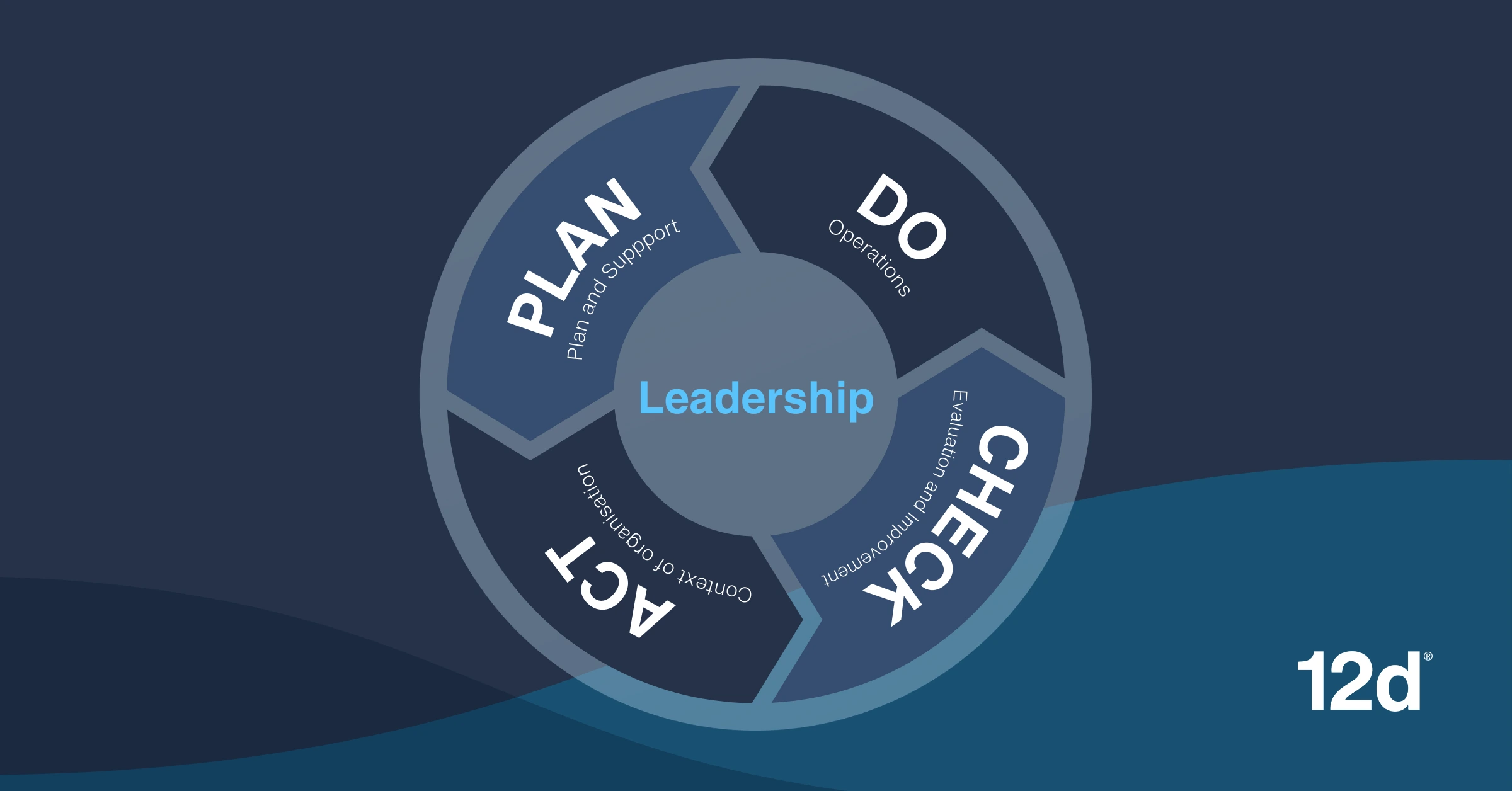
The standard is structured around 10 clauses, with clauses 4-10 containing the mandatory requirements that organisations must meet. These clauses cover everything from understanding your business context and leadership commitment, through to operational controls, performance evaluation, and continual improvement.
For construction companies, key clauses include Clause 7.5 on documented information (controlling drawings, specifications, and project documentation), Clause 8 on operational planning and control (managing construction processes and subcontractors), and Clause 9 on performance evaluation (monitoring quality metrics and conducting audits).
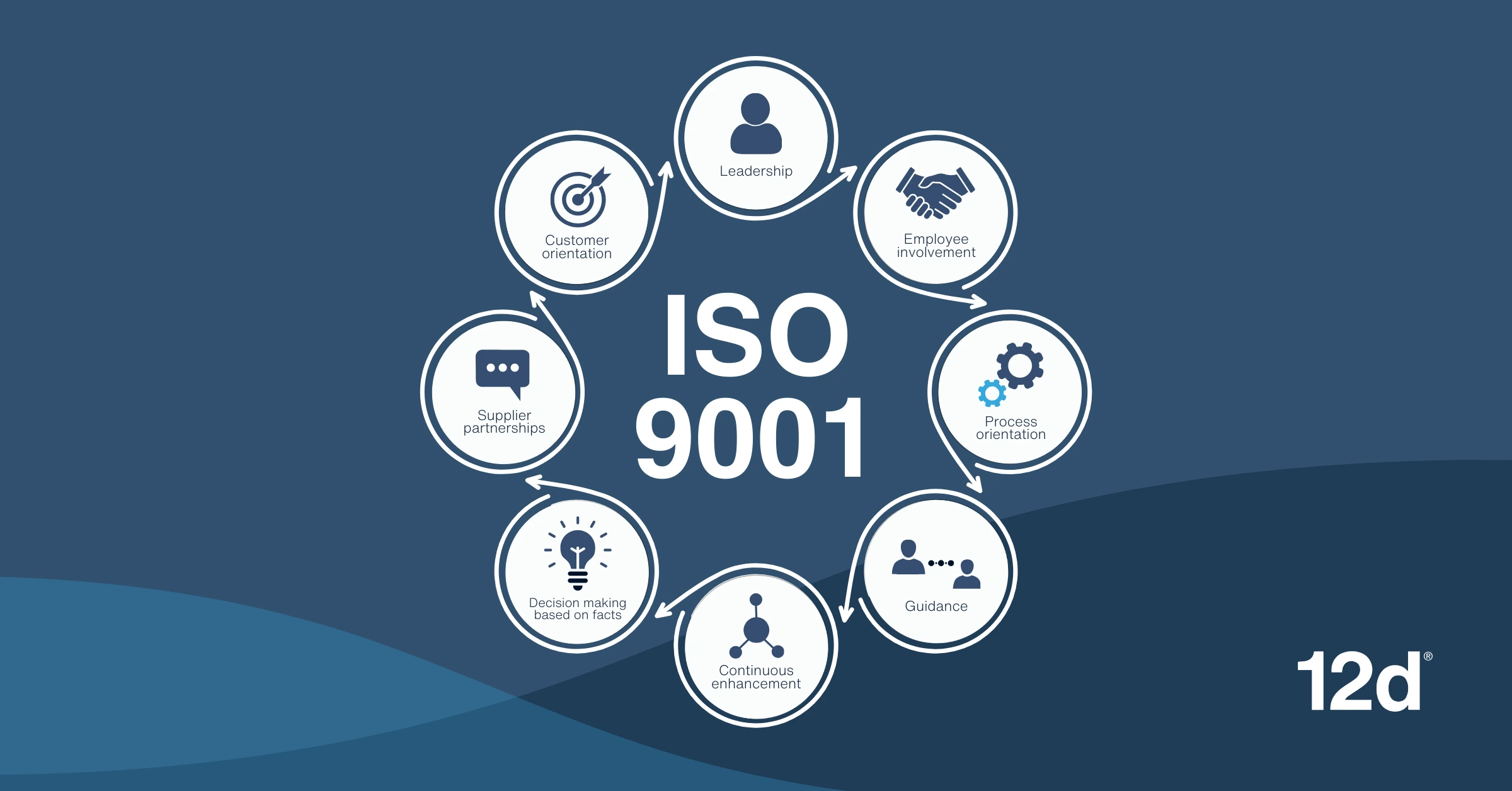
ISO 9001 is based on seven core quality management principles and has been implemented by over one million organisations worldwide across all sectors.
Note: An updated version of the standard, ISO 9001:2026, is scheduled for release in 2026. According to BSI Group, organisations currently working towards or maintaining ISO 9001:2015 certification will have a transition period to adopt the new requirements once published.
For UK construction companies, ISO 9001:2015 certification is particularly valuable for public sector tenders and supply chain qualification. Certification is issued by recognised accreditation bodies and lasts for three years, with regular surveillance audits conducted to ensure ongoing compliance and effectiveness.
3. Why is it Required for UK Construction Companies?
1. Tender and Procurement Requirements
As NQA explains, many government and private clients now mandate ISO 9001 certification before companies can tender for projects.
Purchasing departments in the public and private sector often use a publicly available specification known as PAS-91 in construction-related procurement. According to ISOQAR, PAS-91 procurement questionnaires stipulate that certification must be UKAS-accredited.
For major infrastructure projects, specific sector schemes may also be required. For example, National Highways Sector Schemes require ISO 9001 certification for contractors and subcontractors working on highways projects, covering areas such as road construction, maintenance, traffic management, and tunnel management. Pre-qualification frameworks like CHAS and SSIP similarly expect ISO 9001 certification alongside environmental and safety standards.
2. Building Client Trust
CHAS Certification emphasises that ISO 9001 demonstrates a company’s commitment to quality, providing independent third-party verification that builds confidence with clients making significant investments.
3. Addressing Quality Challenges
Research by Queens University Belfast found that construction quality defects remain widespread in the UK industry. ISO 9001 provides systematic approaches through standardised processes, monitoring, corrective actions, and continuous improvement to address these challenges.
4. ISO 9001 Requirements
ISO 9001:2015 contains ten clauses, with clauses 4-10 outlining specific requirements for construction companies:
Clause 4: Context of the Organisation – Understanding your business environment, including market conditions, regulations, competitors, and stakeholder requirements.
Clause 5: Leadership – Senior management must demonstrate commitment to quality, set objectives, allocate resources, and communicate quality’s importance throughout the organisation.
Clause 6: Planning – Setting measurable quality objectives, conducting risk assessments, developing project-specific quality plans, and planning resources for quality activities.
Clause 7: Support – Ensuring workforce competence through training, maintaining calibrated equipment, managing documented information, and ensuring effective communication.
Clause 8: Operation – Controlling project delivery including planning, contract review, design activities, subcontractor management, construction process controls, inspection and testing, and managing non-conforming work.
Clause 9: Performance Evaluation – Monitoring quality metrics, measuring customer satisfaction, conducting internal audits, and regular management reviews of QMS effectiveness.
Clause 10: Improvement – Implementing corrective actions for quality issues, conducting root cause analysis, preventing recurrence, and capturing lessons learned from projects.
5. Core Requirements for ISO 9001 in Construction
1. Documented Information
According to QMS UK, ISO 9001:2015 has reduced prescriptive documentation requirements, but you still need:
- Mandatory documents: Quality Management System scope, Quality Policy, Quality Objectives, risk assessments, competence evidence, audit records, management review records, and corrective action records.
- Construction-specific documentation: Project Quality Plans, Inspection and Test Plans, Method Statements and Risk Assessments (RAMS), subcontractor evaluation records, material test certificates, and as-built drawings.
2. Processes, Procedures, and Work Instructions
QMS UK explains the documentation hierarchy:
- Processes describe what needs to be done and why (e.g., “Design Management Process”)
- Procedures explain how processes are carried out with specific steps (e.g., “Procedure for Design Review”)
- Work Instructions provide detailed, step-by-step guidance for specific tasks (e.g., “Concrete Cube Testing”)
Construction companies need defined processes for tendering, contract review, project planning, subcontractor management, site inspections, non-conformance management, and client handover.
3. Internal Audits and Management Review
Regular internal audits verify that procedures are followed and objectives achieved. Audits cover active construction sites, office functions, document control, and subcontractor management.
Senior management must review the QMS periodically (typically annually) to ensure it remains effective, examining audit results, customer feedback, process performance, corrective actions, and improvement opportunities.
4. Control of External Providers
Given construction’s reliance on subcontractors, ISO 9001 requires processes for evaluating and approving subcontractors, defining requirements clearly, monitoring performance, maintaining approved supplier lists, and taking corrective action when needed. ProActive QMS notes this plays an integral role in supplier and contractor management.
5. UKAS Accreditation Requirement
A critical UK-specific requirement: your certification body must be UKAS-accredited. ISOQAR warns that non-accredited certification may not be accepted for tendering. UKAS (United Kingdom Accreditation Service) is the sole government-recognised national accreditation body. According to British Assessment Bureau, only UKAS-accredited bodies can issue certification carrying the government-endorsed UKAS “crown and tick” mark.
6. Benefits of ISO 9001 for Construction and Engineering Companies
1. Access to Tender Opportunities
Certification is essential for bidding on many contracts, with numerous UK government and corporate contracts mandating ISO certification. Benefits include eligibility for public sector frameworks, pre-qualification with major contractors, access to larger projects, and faster approval processes. (NQA, Centre for Assessment)
2. Improved Project Management and Quality
ISO 9001 establishes clear procedures for project planning, execution, and monitoring, leading to better project management and ensuring projects are delivered on time and within scope. The standard promotes consistent quality control measures, helping reduce defects, minimise rework, and ensure projects meet specifications. (QMS UK)
3. Enhanced Operational Efficiency
Following industry best practices through ISO 9001 helps construction companies reduce costs and deliver quality more efficiently. Efficiency gains include standardised processes, better resource allocation, reduced waste, streamlined decision-making, and improved coordination. (Offset Services)
4. Better Risk Management
ISO 9001’s risk-based thinking helps construction companies identify, assess, and mitigate risks throughout projects—from safety incidents and quality defects to programme delays and regulatory non-compliance. (QMS UK)
5. Improved Customer Satisfaction
ISO 9001 helps companies focus on delivering projects that meet or exceed customer expectations. The standard emphasises effective communication and responsiveness, maintaining open communication with clients, providing regular updates, and promptly addressing concerns. This leads to higher client satisfaction scores and increased repeat business. (QMS UK, Offset Services)
6. Better Supply Chain Management
ISO 9001 helps manage subcontractors continuously, ensuring appropriate processes are in place. Benefits include rigorous subcontractor selection, clearer requirements, better performance monitoring, and improved coordination. (QMS UK)
7. Enhanced Reputation and Workforce Competence
Certification demonstrates professionalism to clients, regulators, and the wider industry. ISO 9001:2015 emphasises employee competence, translating to ongoing training ensuring the workforce has the latest skills and knowledge. (Offset Services)
7. Importance of Document Control for ISO 9001
Document control is critical for ISO 9001, particularly in construction where using incorrect information can have serious consequences.
Why Document Control Matters in Construction
Construction projects involve extensive documentation: architectural and engineering drawings, specifications, contracts, method statements, inspection plans, material certificates, and as-built drawings. Using outdated or incorrect documents can result in construction to superseded drawings, non-compliance with specifications, safety incidents, regulatory violations, costly rework, and client disputes.
QMS UK emphasises that efficient document control helps monitor documentation effectiveness, ensuring controlled documents are identified, suitable, available, protected, and properly stored.
ISO 9001 Document Control Requirements
ISO 9001:2015 Clause 7.5.3 requires documented information to be:
- Available and suitable for use where and when needed
- Protected from loss, improper use, or loss of integrity
Specific requirements include distribution and access control, proper storage and preservation, clear identification and traceability, control of changes with approval processes, defined retention and disposal procedures, and review and approval before release.
Practical Document Control Systems
Effective document control includes:
- Document Register – A master list showing document titles, current revisions, dates, owners, approval status, and distribution.
- Version Control – Systems to identify current versions, track revision history, identify changes, and remove obsolete versions.
- Approval Workflows – Defined processes for document review, approval authorities, recording approvals, and timescales.
- Change Control – Processes for requesting, reviewing, assessing impact, approving, and communicating changes.
Document Control Technology Solutions
Modern construction companies increasingly use digital document management systems offering cloud-based access, automatic version control, automated workflows, complete audit trails, role-based access controls, mobile access for site teams, and integration with project management systems.
12d Synergy for Construction Information Management
For engineering and construction companies working on infrastructure and civil engineering projects, specialised solutions like 12d Synergy provide comprehensive data and information management capabilities specifically designed for the industry.
Key capabilities include:
- Centralised Project Information Management – Single source of truth for all project documentation and data, integration with engineering software, and coordination between office and field operations
- Version Control and Audit Trails – Automatic version control for all documents, complete audit trails showing all activities, ability to track changes and roll back versions, and evidence for ISO 9001 audits
- Secure Collaboration – Secure sharing between internal teams, clients, and subcontractors with role-based access controls and real-time collaboration
- Compliance Support – Direct support for ISO 9001 document control requirements, reporting capabilities for audits and reviews, and demonstration of systematic document control
- Mobile Capabilities – Site teams can access current drawings and information via mobile devices, upload inspection reports and survey data from the field, with synchronisation between office and field systems
- Engineering Data Management – Management of survey data, digital terrain models, storage and version control of design files, and integration with 12d Model and other engineering software
For construction companies pursuing ISO 9001 certification, investing in robust document and information management systems like 12d Synergy supports compliance while delivering operational benefits including reduced errors, improved coordination, better traceability, and enhanced project outcomes.
The Business Case for Document Control Investment
Implementing effective document control delivers substantial returns through:
- Risk Mitigation – Reduced construction errors, lower non-compliance risk, protection against liability, and better defence in disputes.
- Cost Savings – Reduced rework, less time searching for information, fewer variations from documentation errors, and avoidance of penalties.
- Quality Improvements – More consistent outcomes, better traceability, improved coordination, and higher quality deliverables.
- Efficiency Gains – Faster access to information, streamlined approvals, better coordination, and more effective communication.
- Competitive Advantage – Demonstrating robust document control systems in tender submissions helps win bigger and more valuable contracts, particularly for public sector work where systematic information management is a key evaluation criterion.
8. Conclusion
ISO 9001 certification has become essential for UK construction and engineering companies. Whether driven by tender requirements, client expectations, or operational improvement, systematic quality management is fundamental to business success.
This guide has covered the essentials: what ISO 9001 is, why it’s required (including UKAS accreditation), the core requirements from understanding context through to continual improvement, the significant benefits including tender access and improved delivery, and the critical role of document control supported by modern solutions like 12d Synergy.
Critical Point: UKAS Accreditation
Ensure your certification comes from a UKAS-accredited body. As ISOQAR warns, non-accredited certification may not be accepted for tendering, wasting time and money. Verify accreditation status via the UKAS website.
Getting Started
Key steps include conducting a gap analysis, securing genuine management commitment, considering professional guidance from construction-experienced consultants, selecting a UKAS-accredited certification body, planning realistic timescales (6-12 months), investing in supporting technology, and focusing on authentic implementation that improves operations rather than just satisfying auditors.
Authentic Implementation
Research by Queens University Belfast identified issues where quality systems became disconnected from actual site practices. Success requires leadership commitment, practical procedures, adequate resources, integration with working methods, and meaningful accountability.
ISO 9001 is a journey of continuous improvement. Real value comes from improved processes, better project outcomes, and satisfied clients that systematic quality management brings. For UK construction companies, ISO 9001 provides the foundation for sustainable growth, competitive advantage, and operational excellence. Companies that embrace it genuinely—as a business improvement tool rather than merely a compliance exercise—will thrive in an increasingly demanding market.
With proper implementation supported by effective document control and modern information management systems like 12d Synergy, ISO 9001 can transform how your construction business operates, competes, and succeeds.
Resources
Below is a list of recommended resources for learning further about ISO 9001:
Standards and Accreditation:
Pre-qualification Schemes:
Industry Resources:
- NQA – Quality Standards for Construction
- Centre for Assessment – Construction Certifications
- AvISO Consultancy – Construction and Engineering
- ProActive QMS – Construction Sector
Document Control Resources:
- QMS UK – ISO 9001 for Construction
- QMS UK – Processes, Procedures and Work Instructions
- Offset Services – ISO 9001:2015
Information Management:
- 12d Synergy – Data and information management for construction projects
This guide is for informational purposes and does not constitute professional advice. Construction companies should consult with qualified ISO consultants and UKAS-accredited certification bodies for specific guidance on implementing ISO 9001.